Get In Touch
Schlossbergstraße 5, 72070 Tübingen
contact@alexanderfechner.com
Back
UX/UI

Evocalize


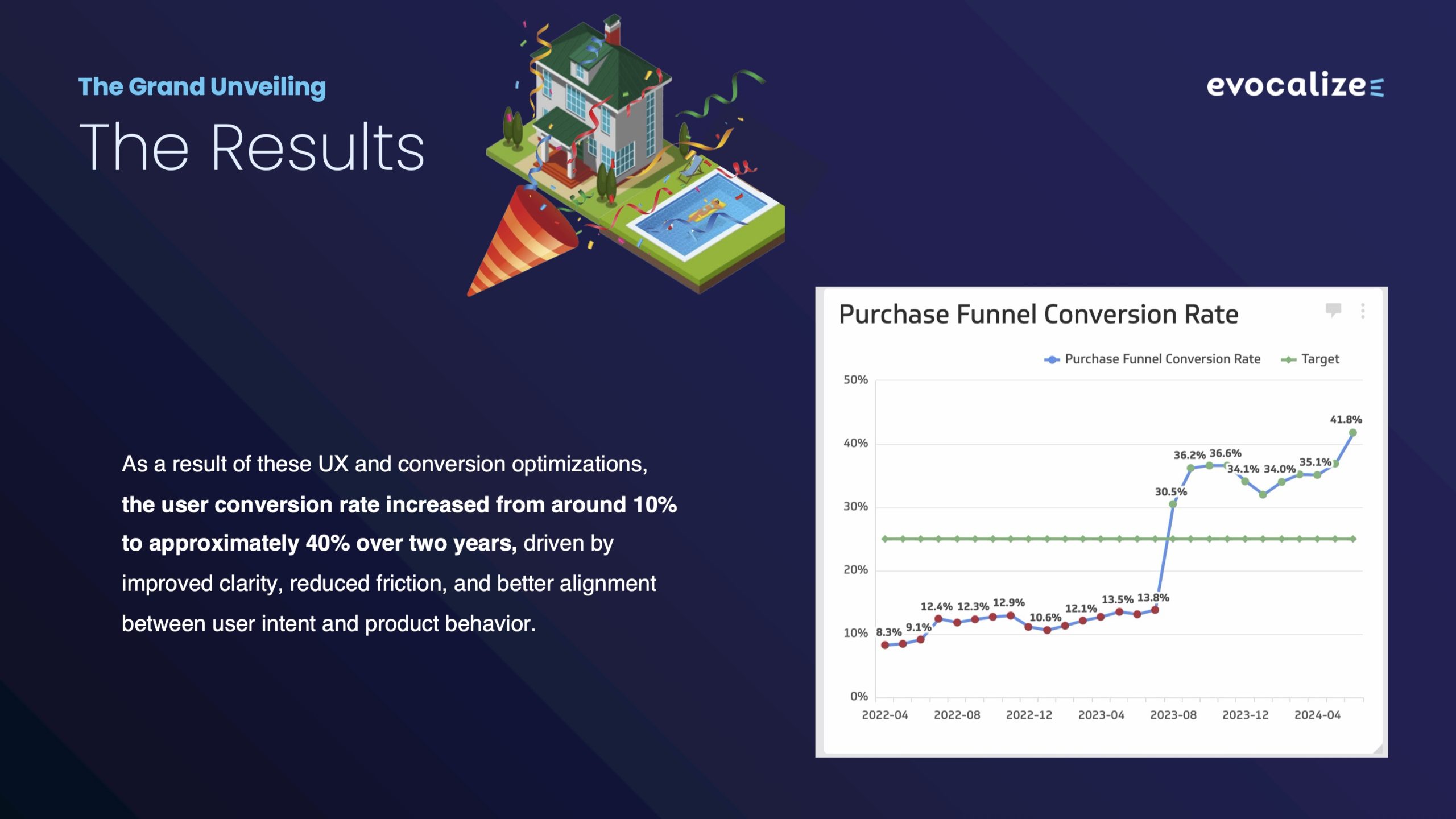
Conversion-driven UX redesign for a multi-million-revenue marketing automation platform (US) that increased user conversion from 12.9% to 41.8% within two years.
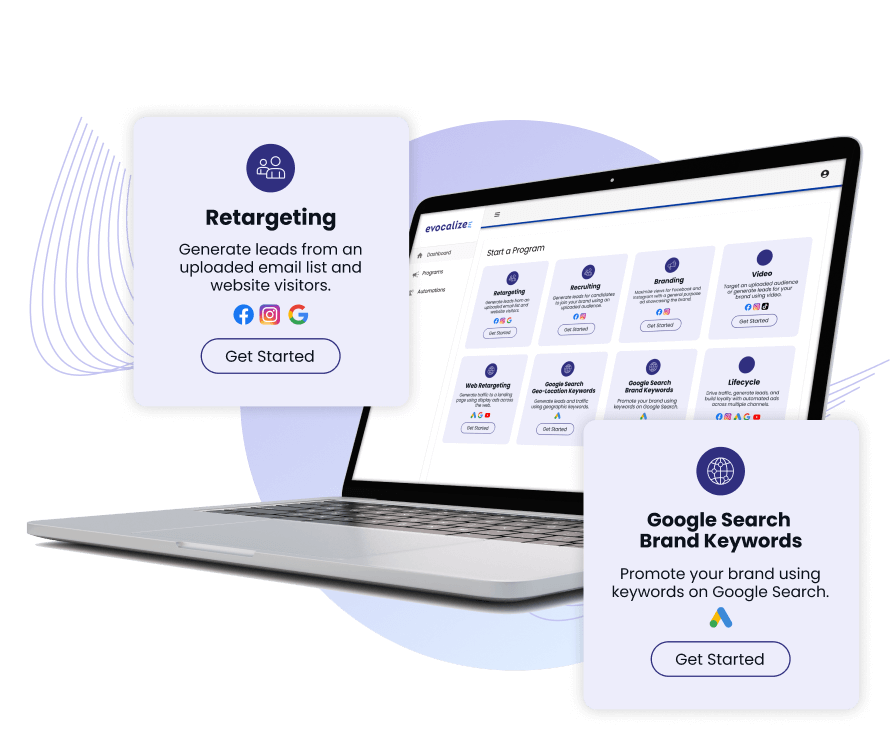
Note: Due to the nature of the business and confidentiality requirements, certain data points, implementation details, and design elements are intentionally simplified or omitted.

Context

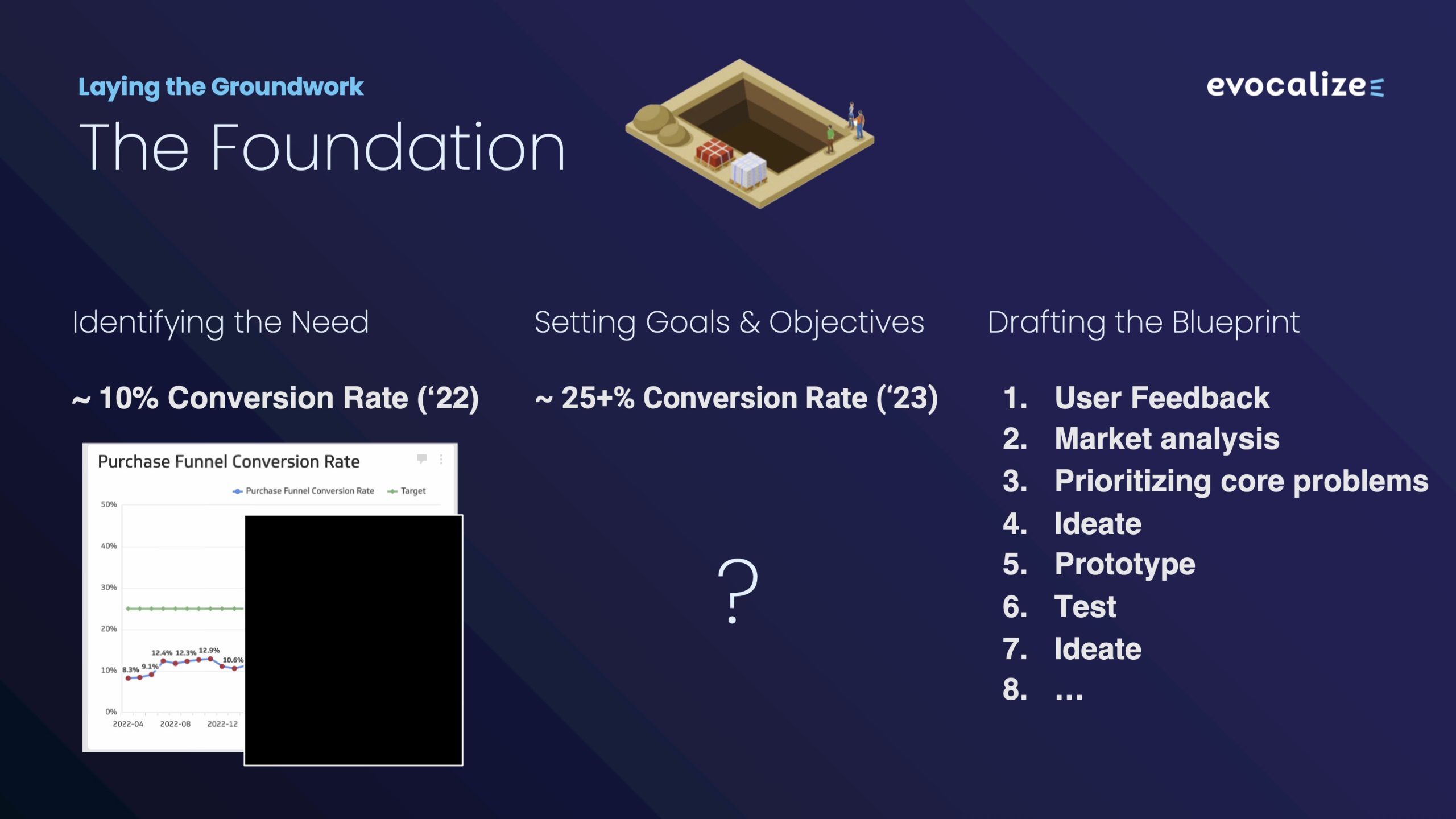
Evocalize is a multi-million-revenue marketing automation platform with a large customer base. Despite strong demand, product adoption and conversion were limited by a fragmented and friction-heavy user experience. Many users logged in once but failed to reach value, resulting in a conversion rate of around 10–12%.

Problem

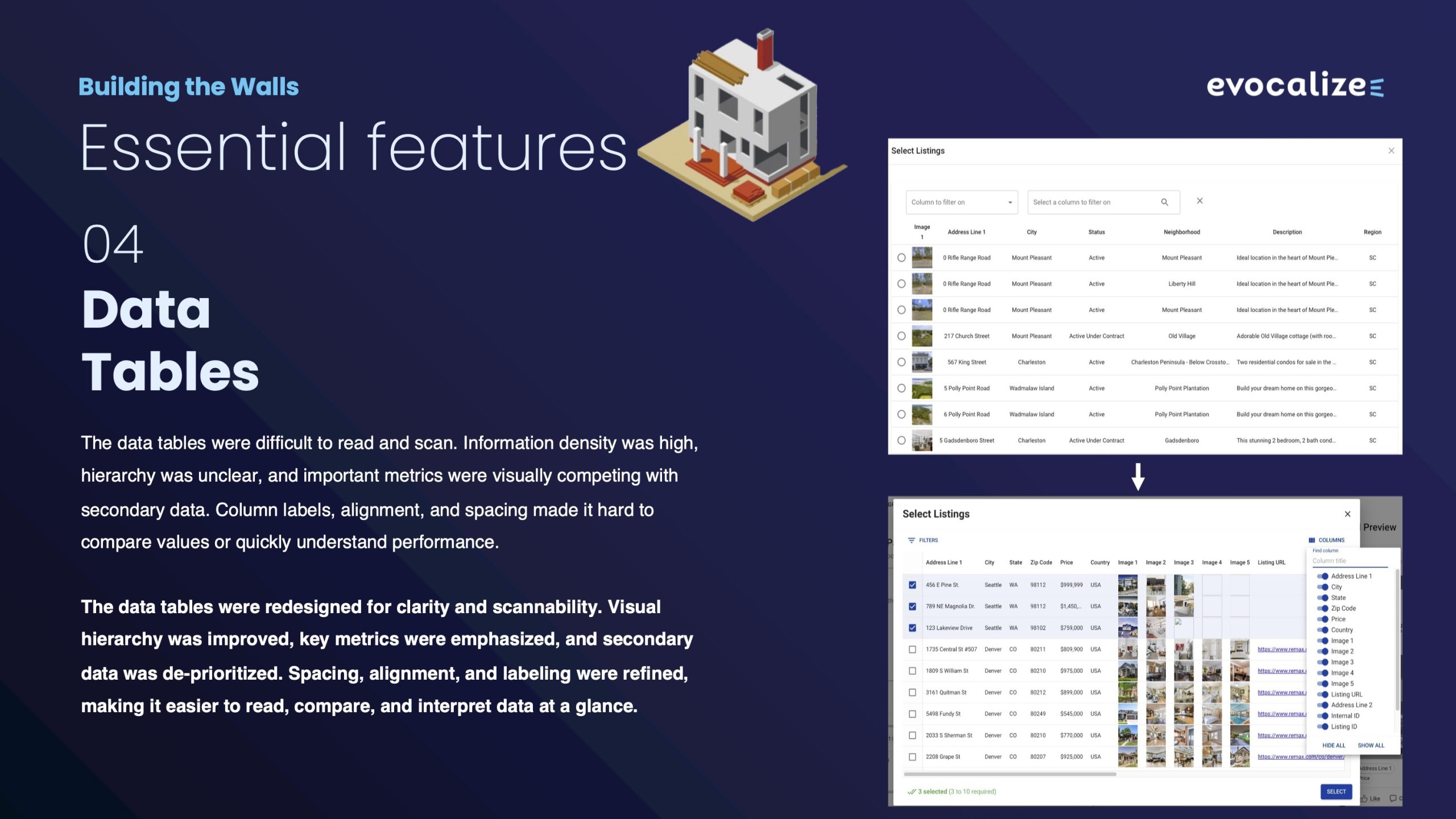
Core workflows such as onboarding, campaign setup, monetization, and reporting were complex and poorly connected. Users struggled to understand what to do next, how value was created, and whether campaigns were performing. The product exposed internal complexity instead of guiding users, which limited adoption and ongoing use.

Approach

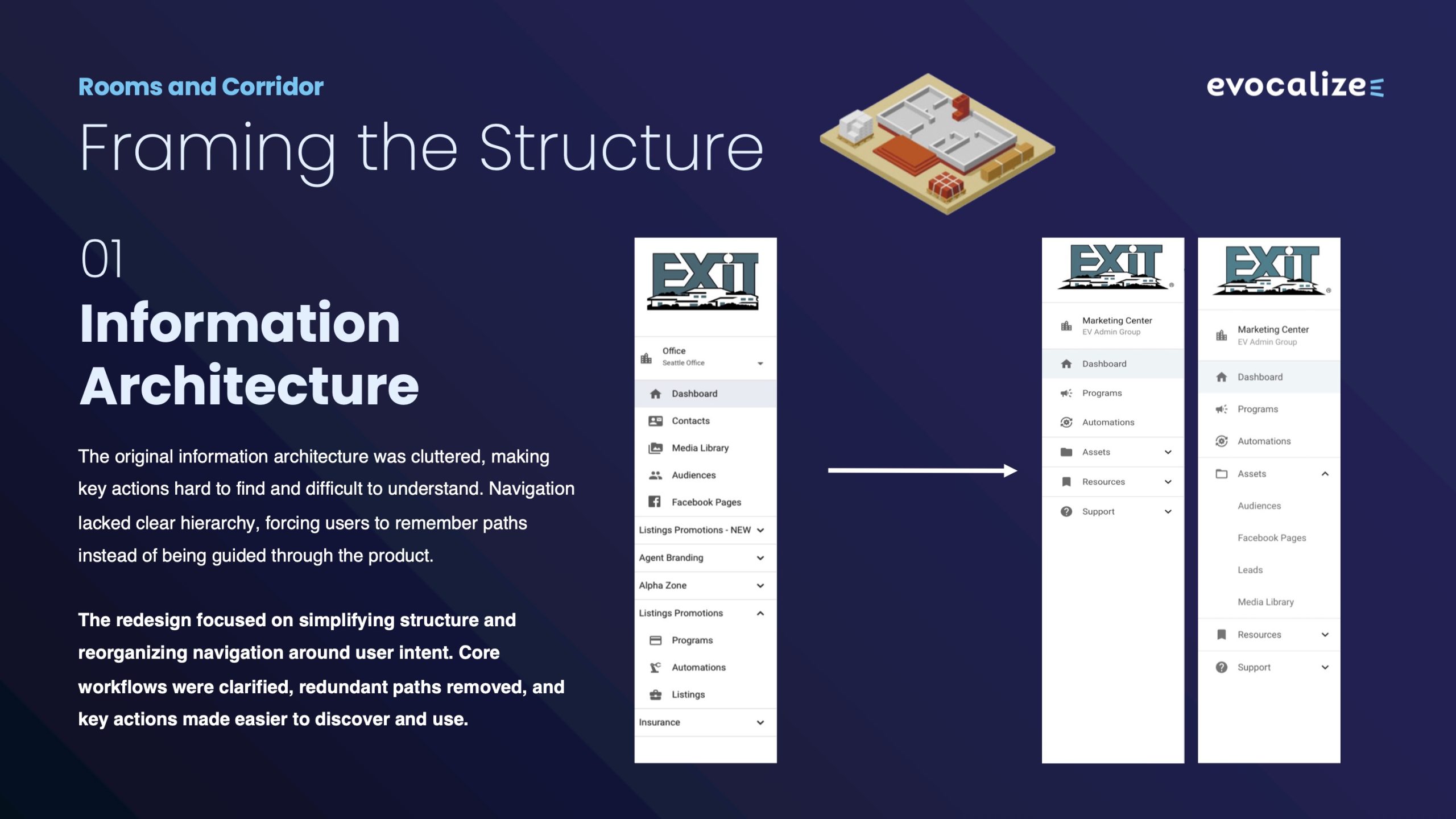
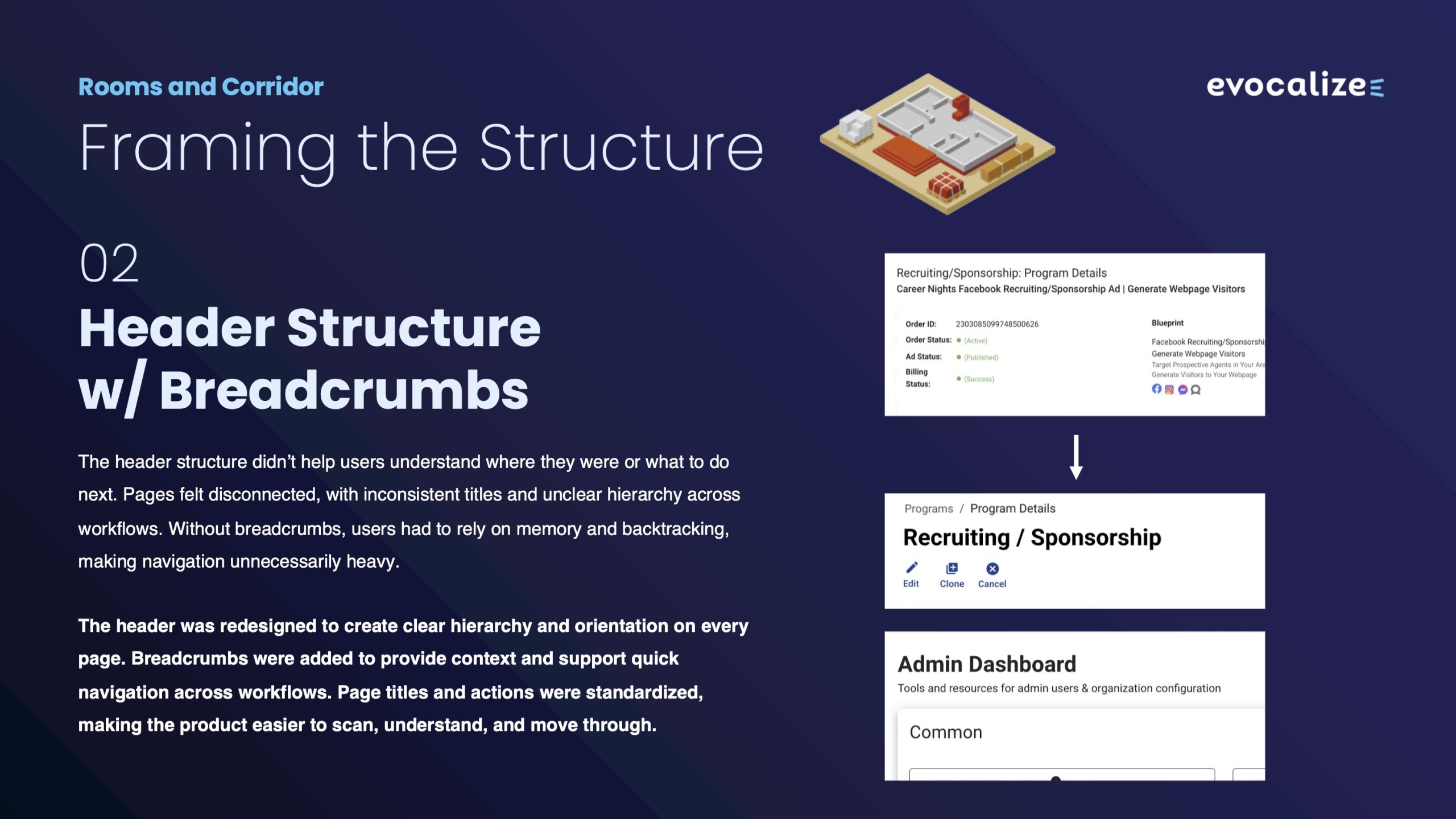
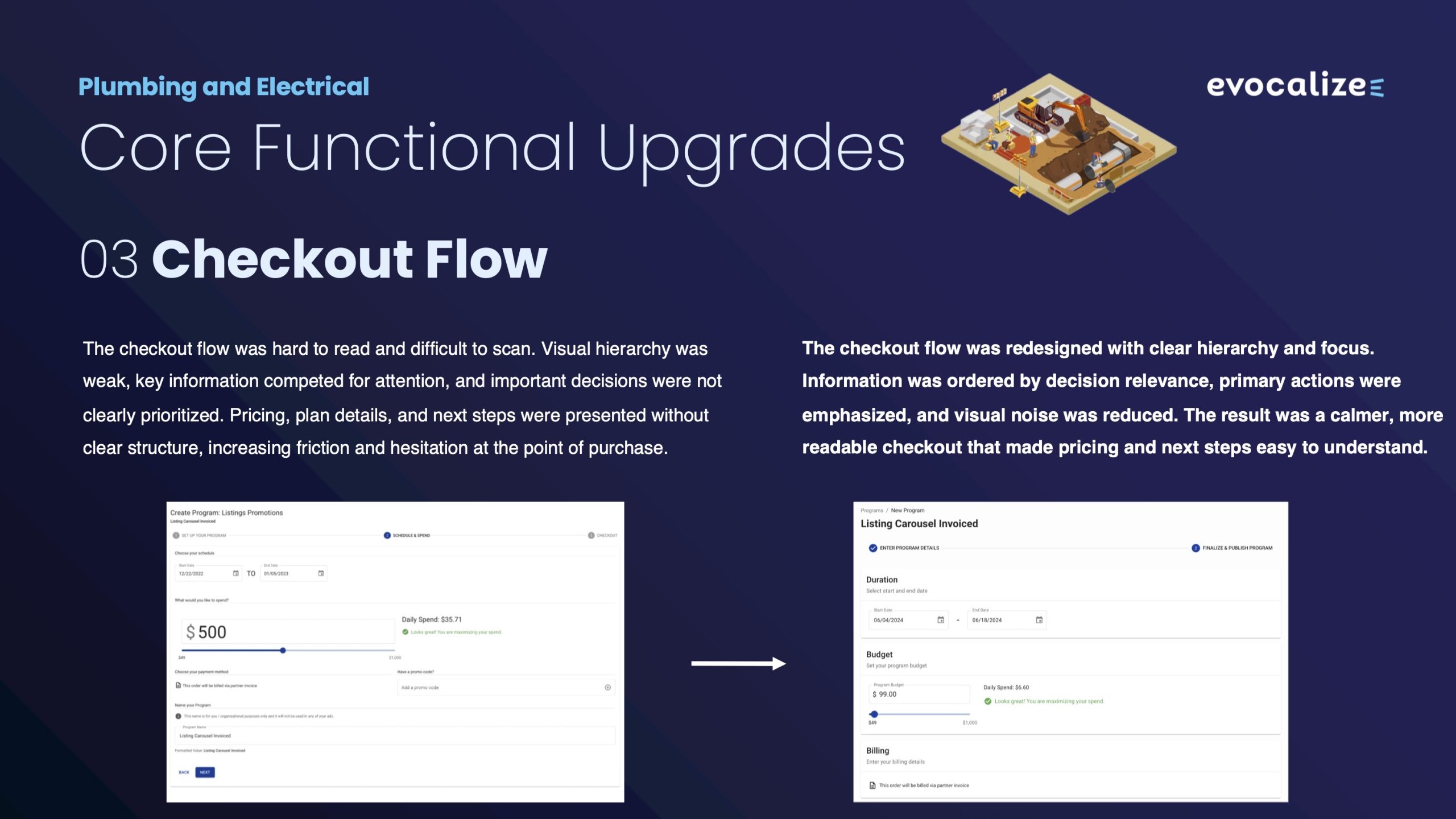
I led a UX-driven redesign focused on removing friction, clarifying user intent, and aligning product structure with real user behavior. The work started at a foundational level—information architecture, navigation, and core workflows—before addressing onboarding, monetization, and reporting. The goal was not to add features, but to make existing capabilities understandable and usable.

Role

UX Designer

Duration

2.5 Years

Tools

Adobe XD
Adobe Photoshop
Adobe Illustrator
Figma
UserZoom

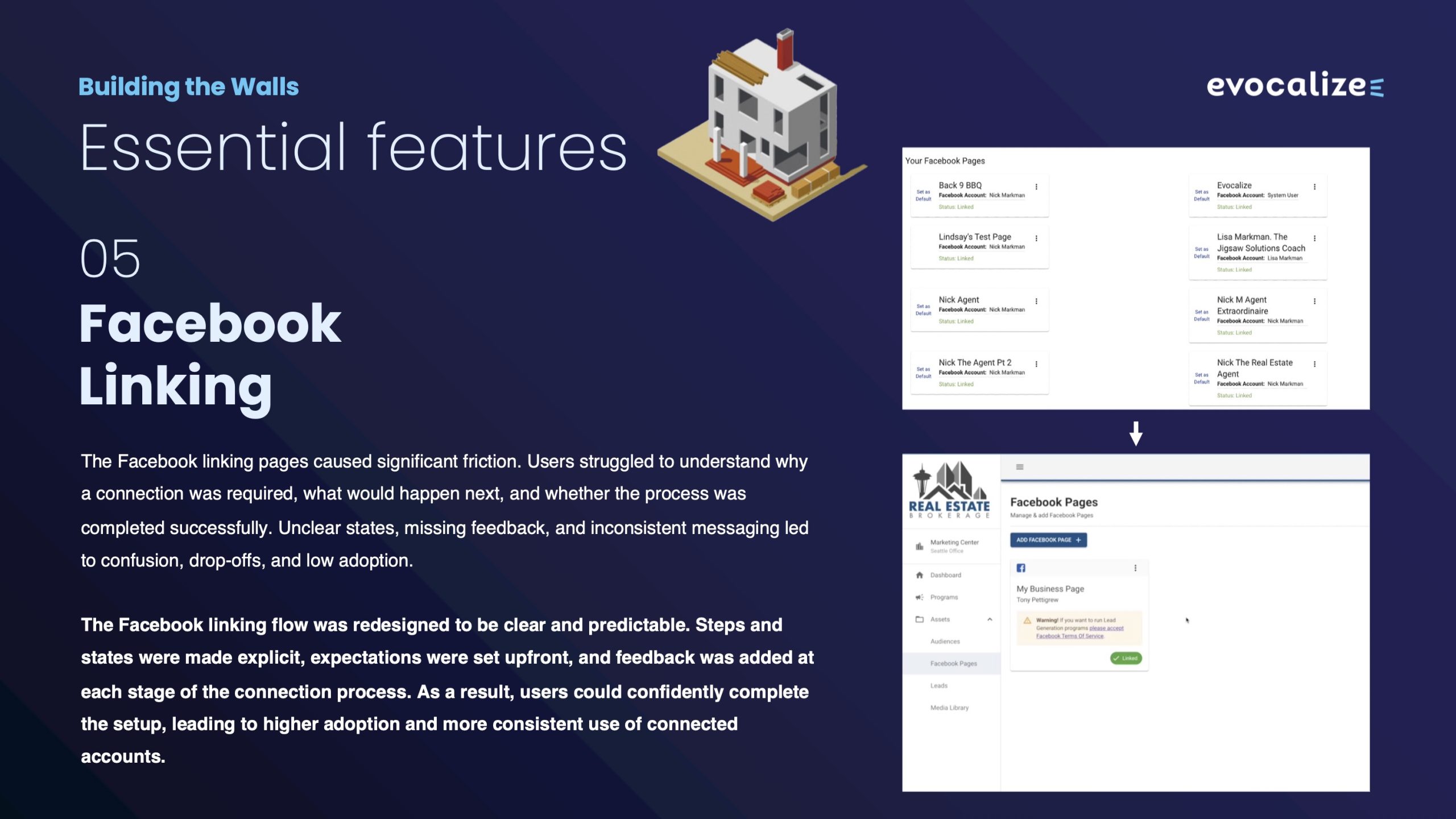
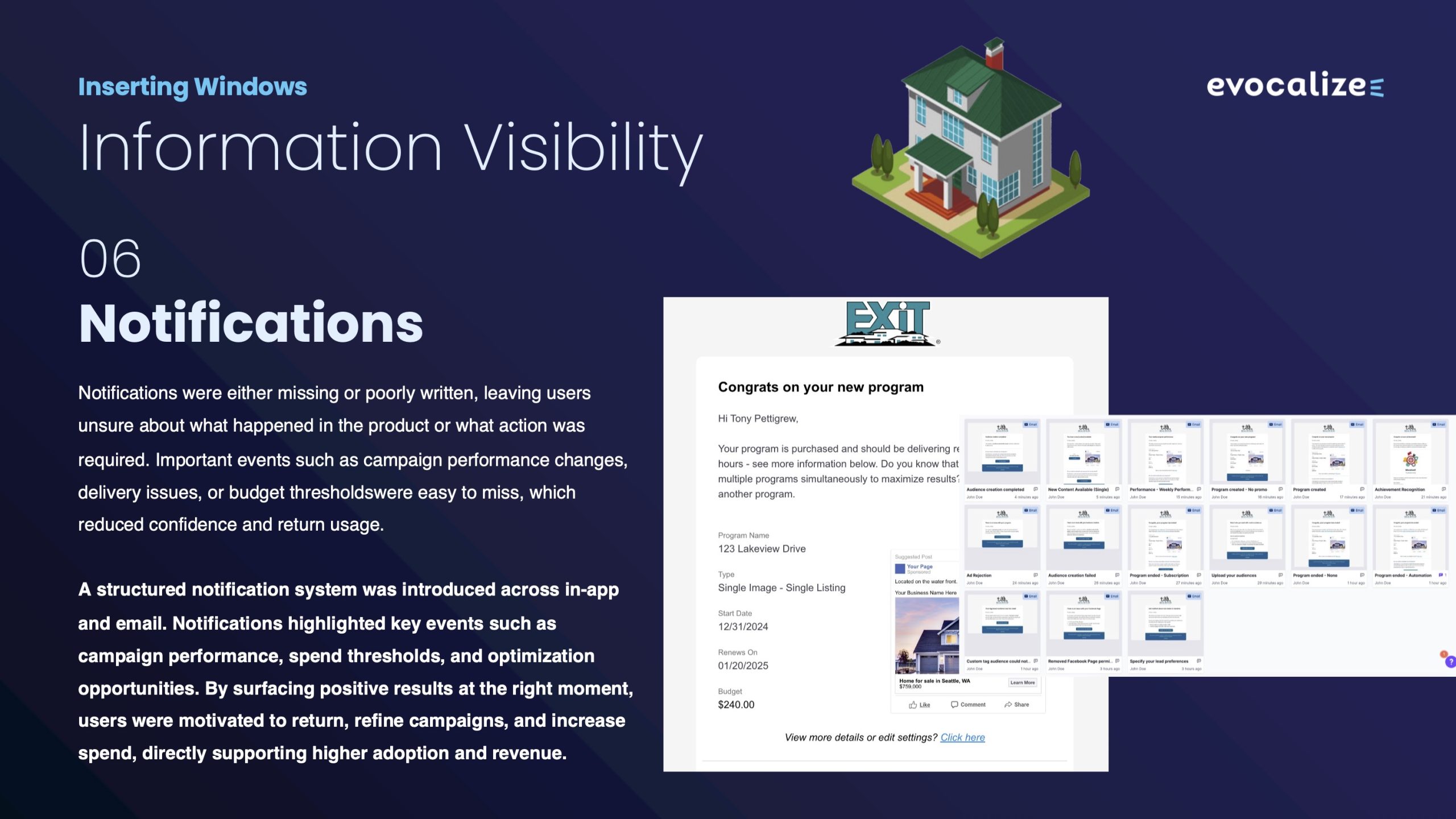
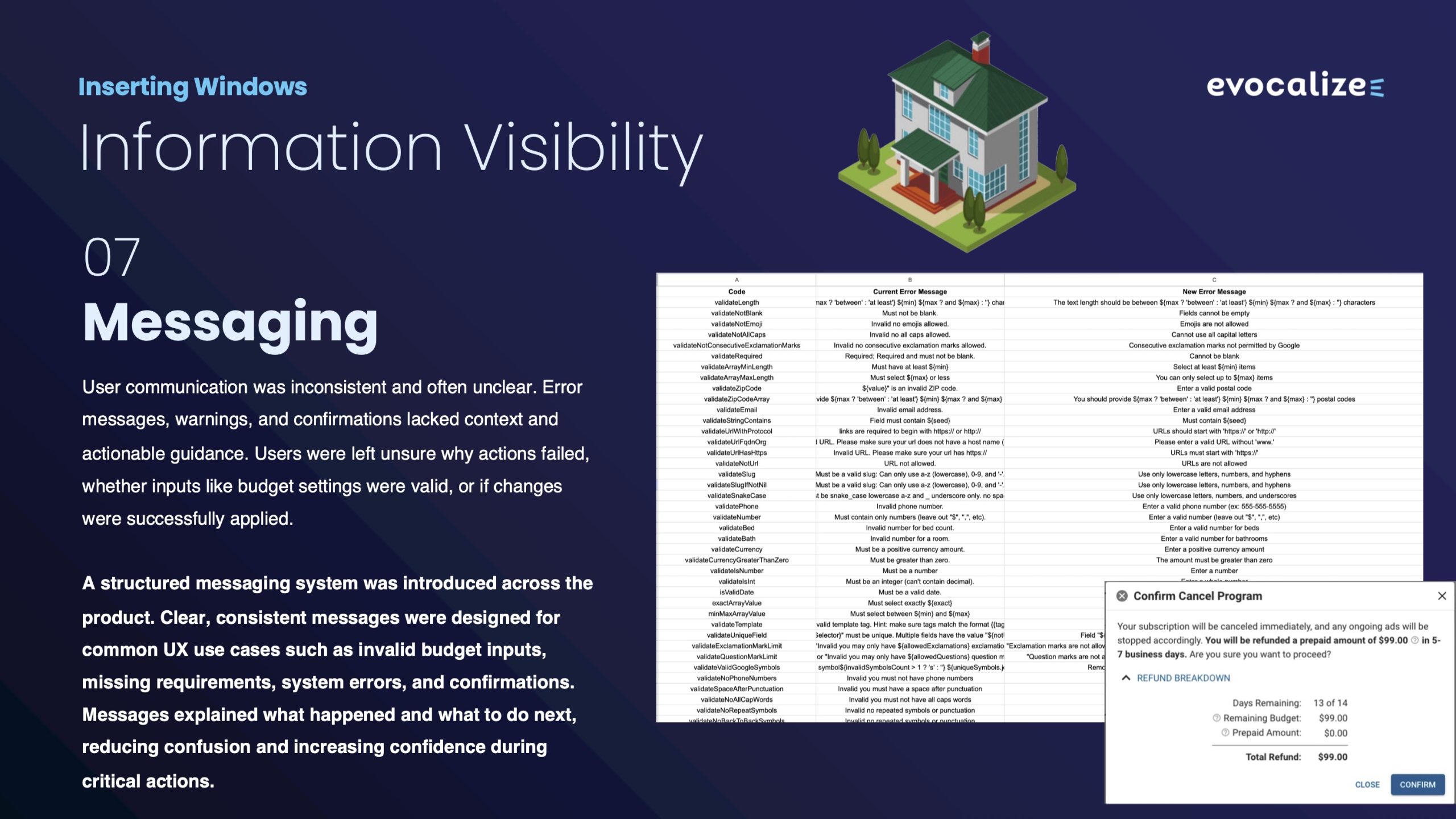
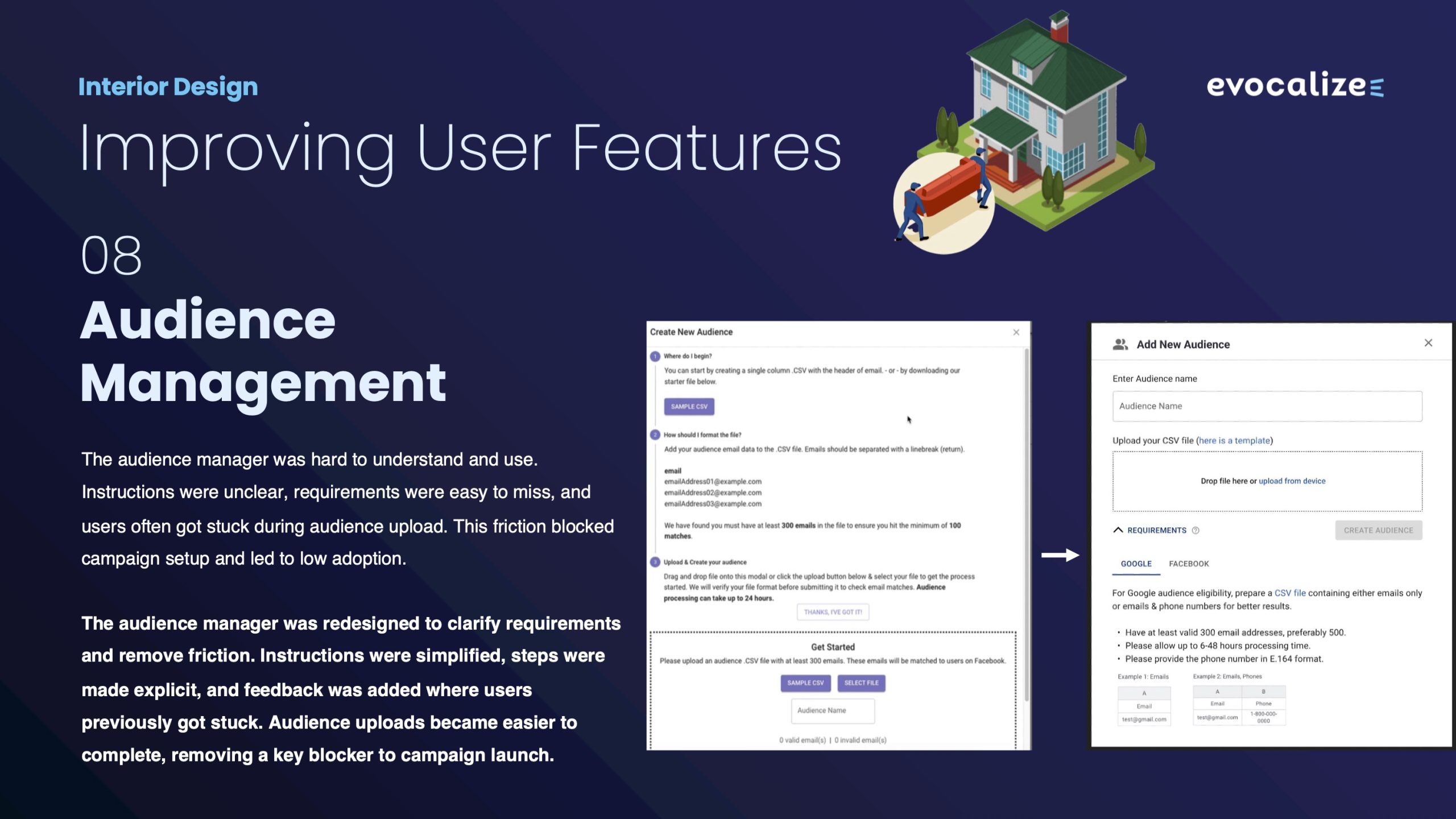
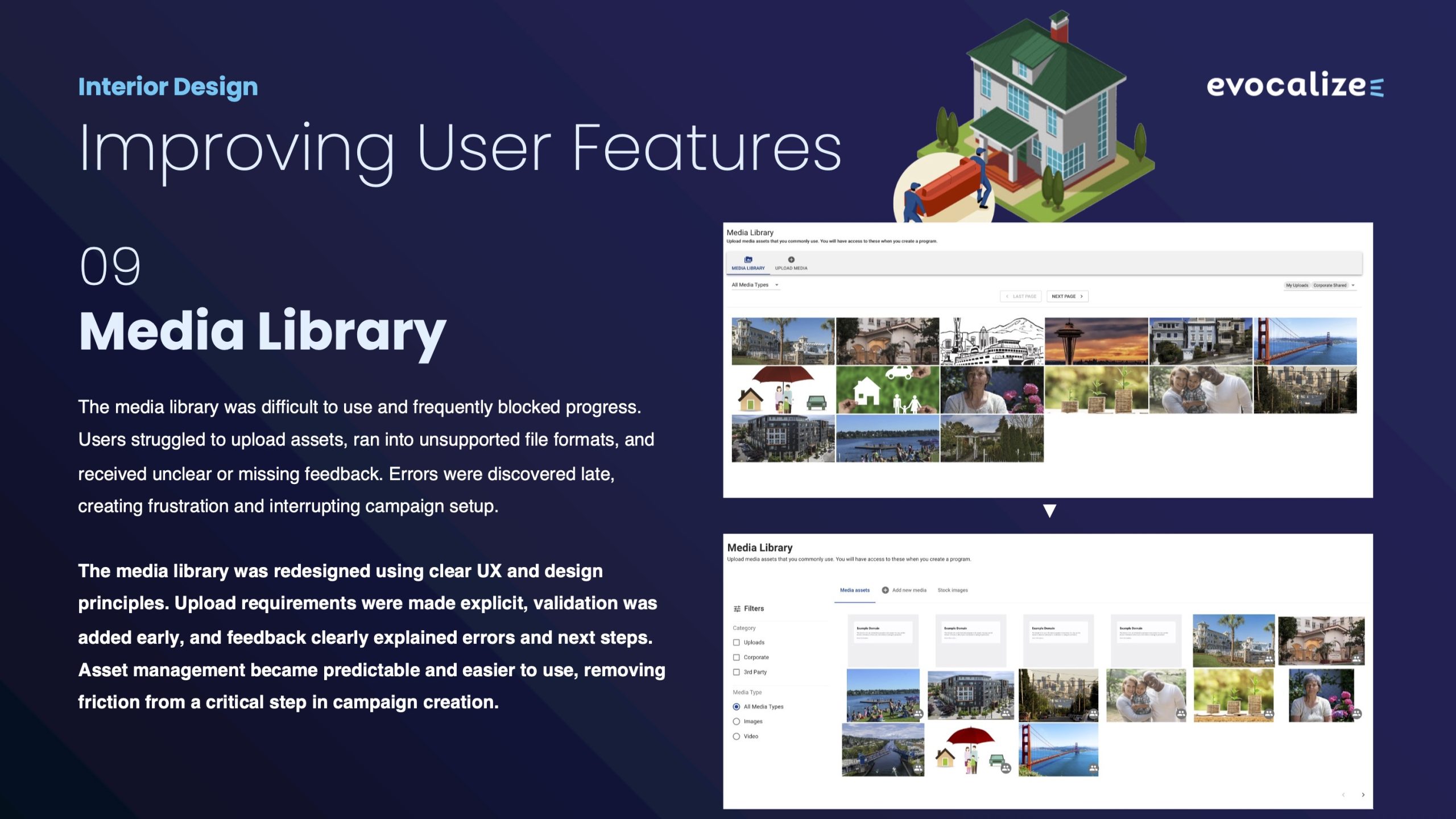
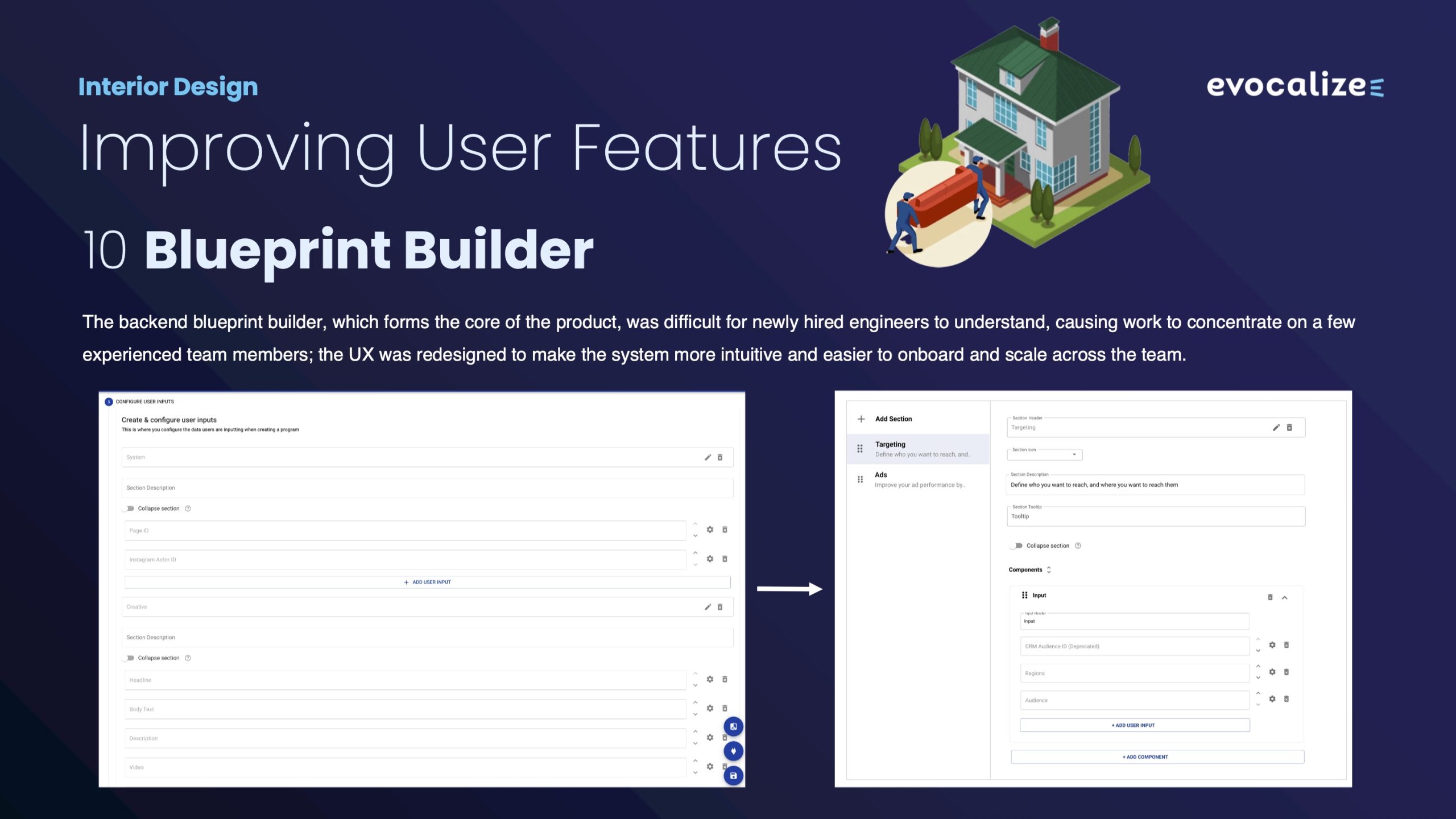
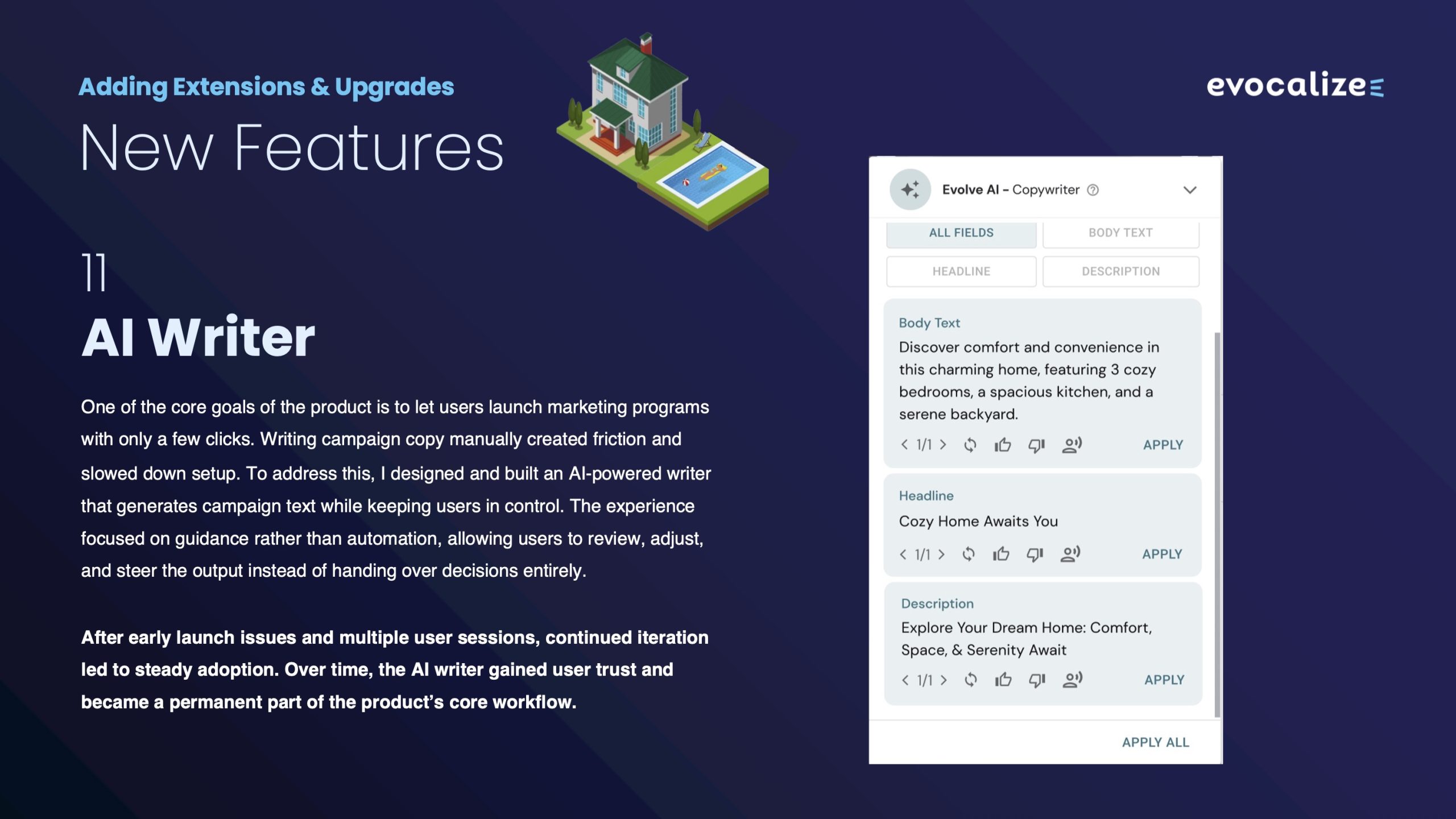
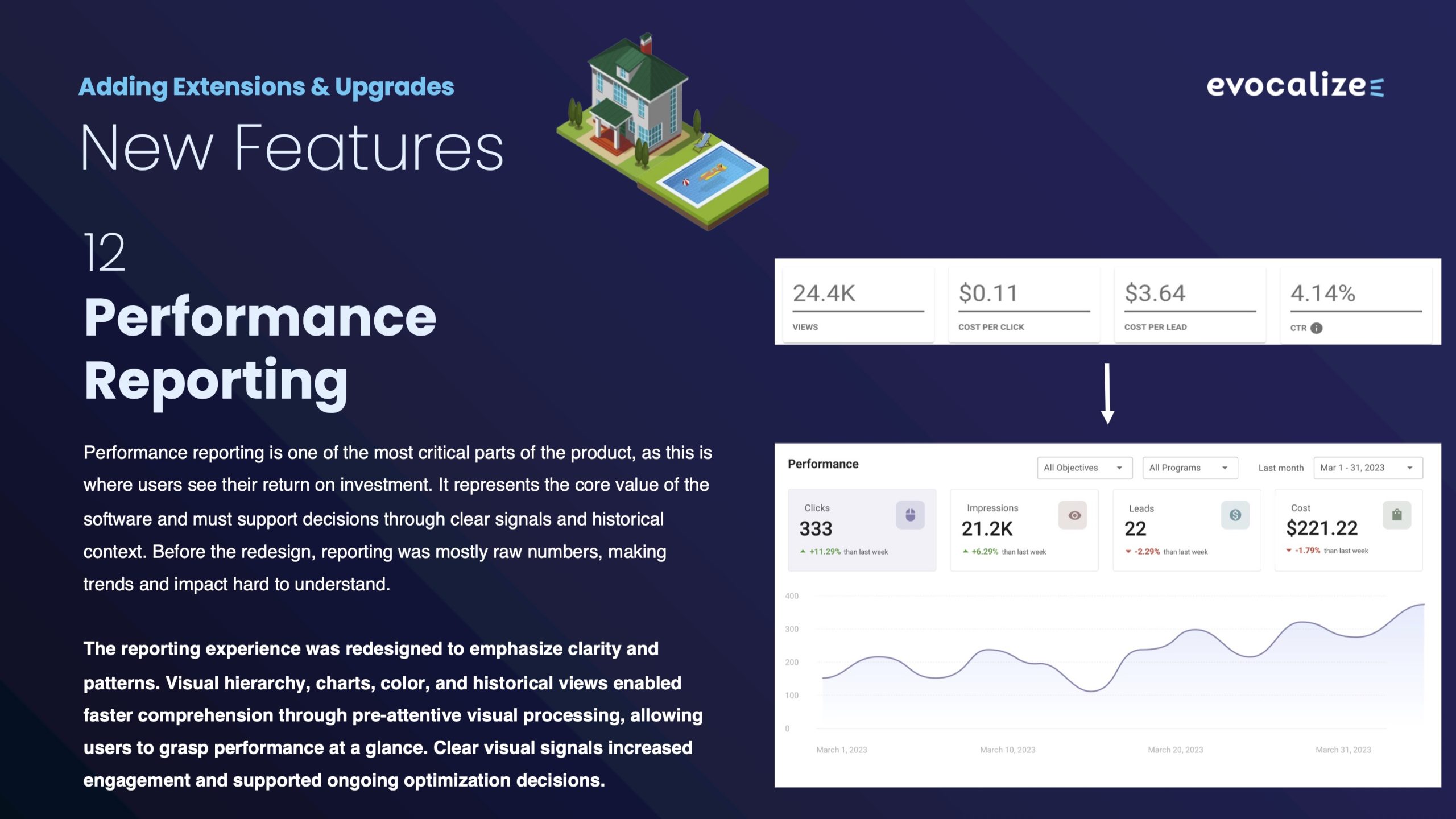
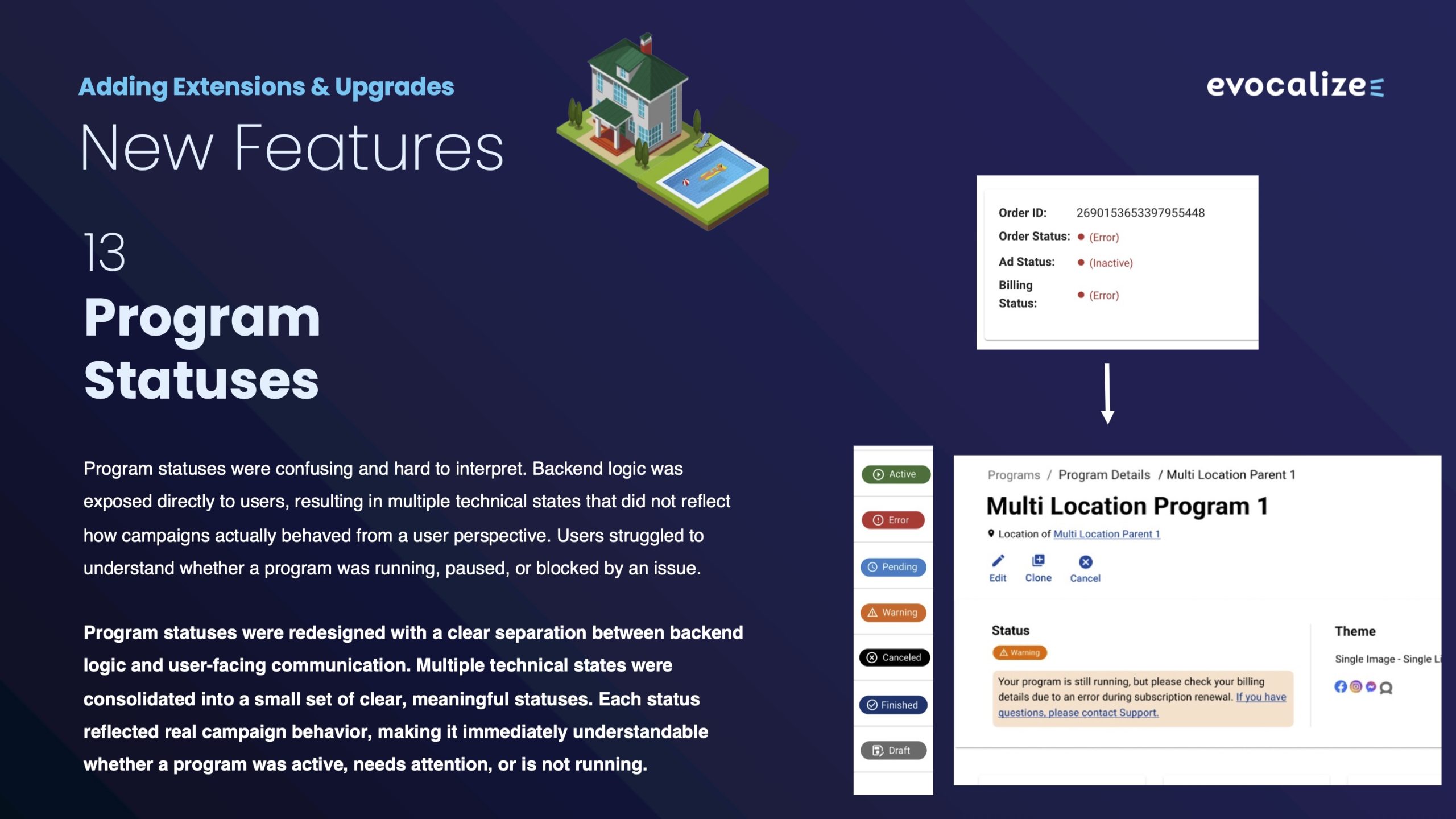
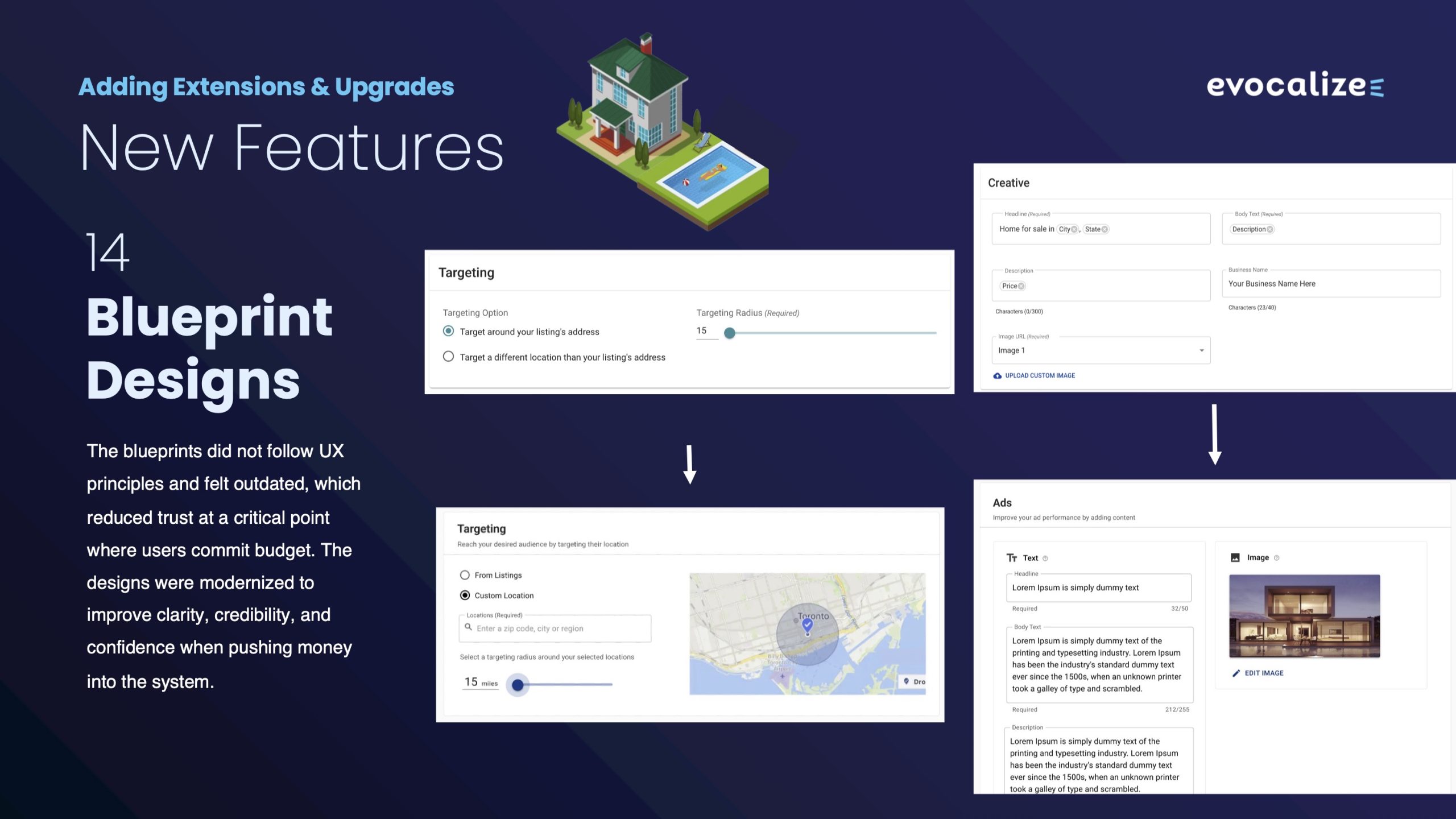
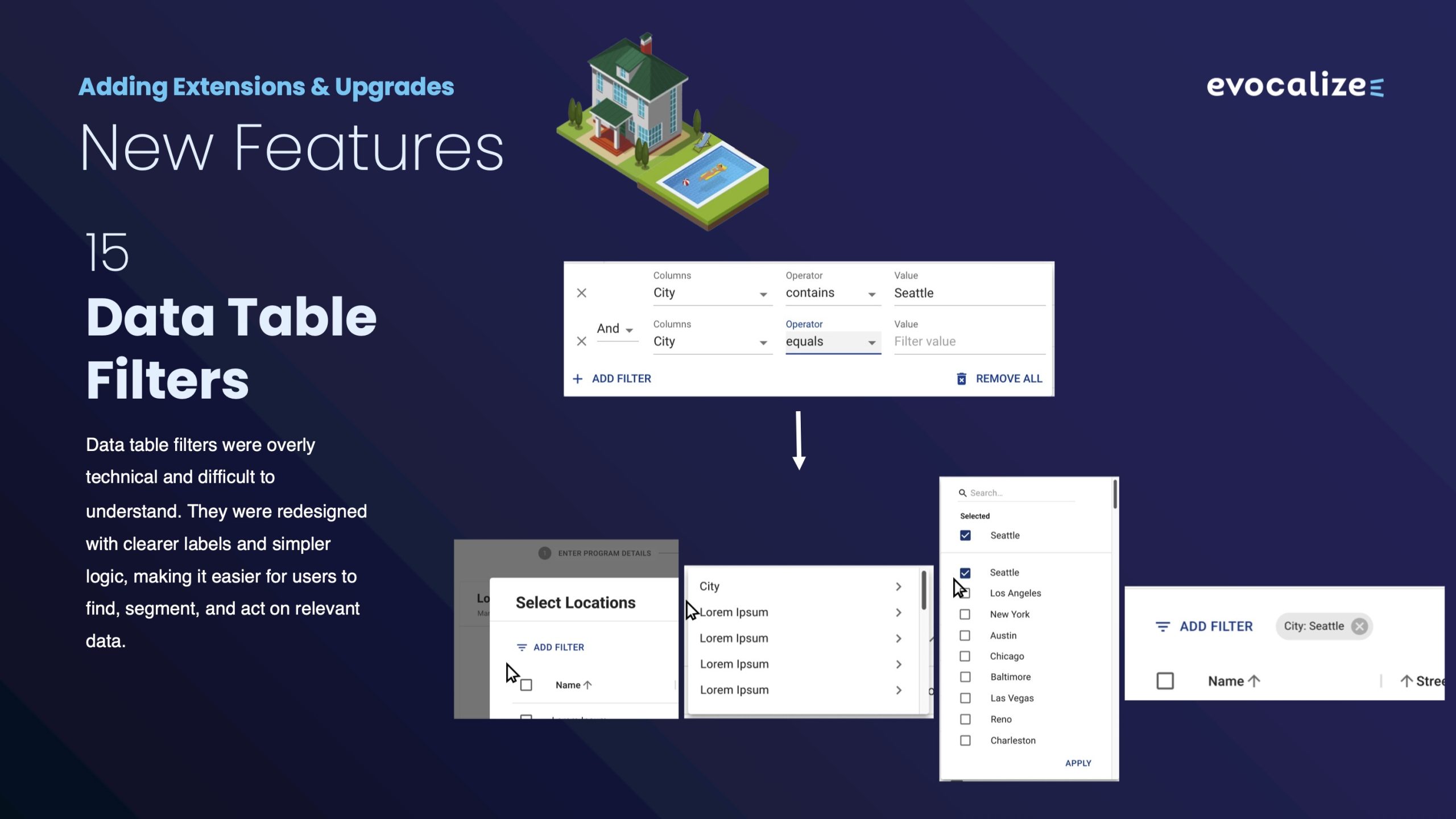
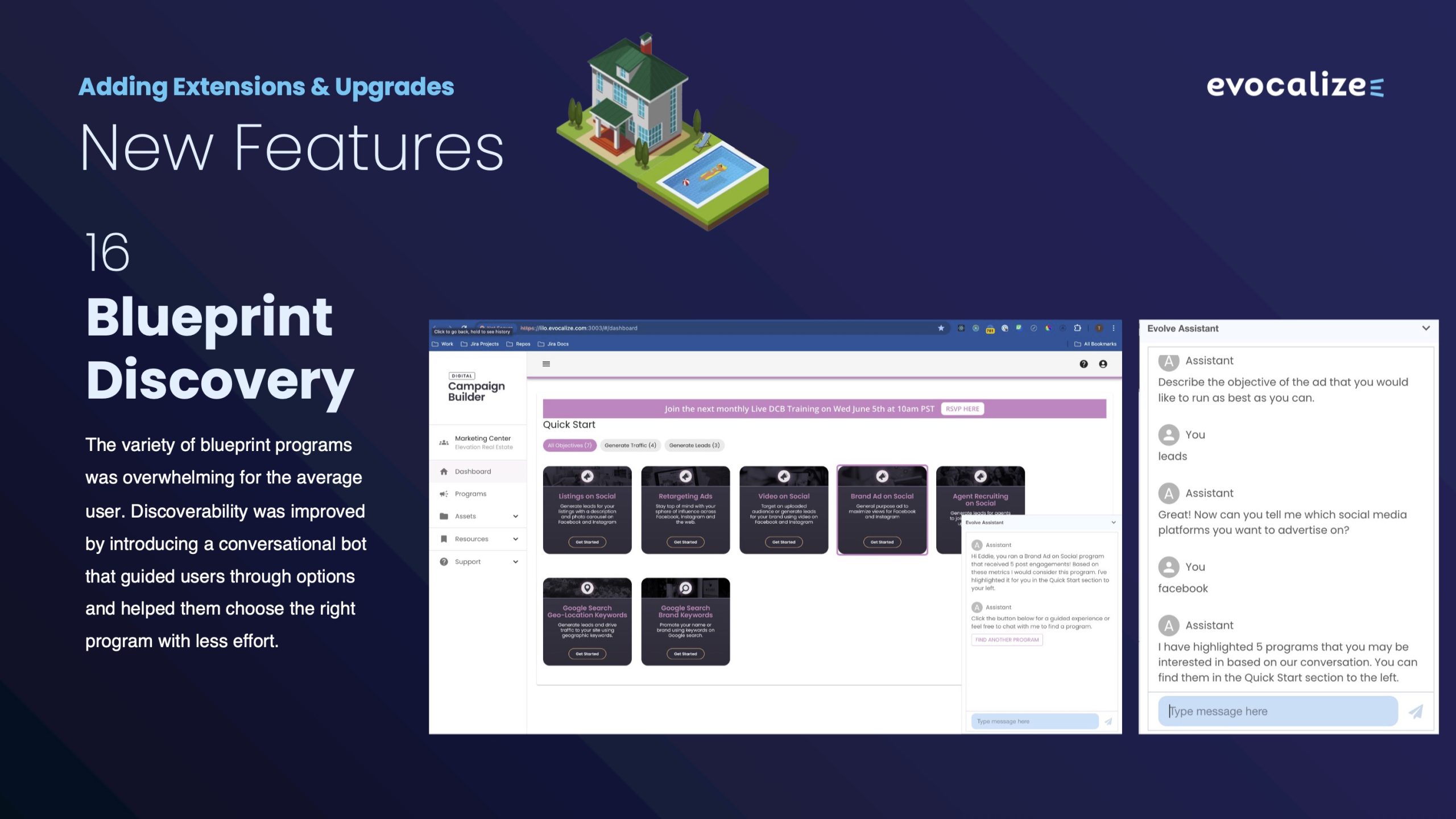
A detailed walkthrough of all individual improvements and iterations:

Impact

From the start of the UX improvements, conversion rates began to improve consistently. Each change was based on detailed analysis of user behavior, drop-off points, and friction within core workflows, followed by continuous iteration across the product. Rather than relying on isolated optimizations, the improvements worked together to reduce complexity, clarify user intent, and make value visible earlier.

Over time, this led to a sustained increase in adoption and engagement, ultimately raising user conversion from approximately 10% to around 40% over two years. The impact went beyond conversion alone, strengthening monetization, confidence in the product, and long-term usage at scale.

Prototype


We use cookies to give you the best experience. Cookie Policy